
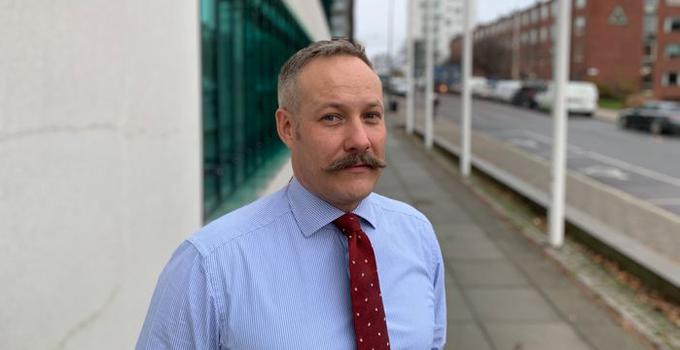
Martin Neuding Skoog, Senior Lecturer in military history at the Swedish Defence University.
New research project maps the early modern roots of Swedish intelligence
Martin Neuding Skoog, Senior Lecturer in military history at the Swedish Defence University, has been granted SEK 2,105,000 by the Torsten Söderberg Foundation for the research project Statecraft and Secrets: The Early Modern Roots of Intelligence.
The project will examine the long-term significance of Swedish foreign intelligence as a strategic tool in political decision-making from the seventeenth to the twentieth century.
“The research is an independent continuation of my previous study on European intelligence networks in the sixteenth century. Our understanding of how European states’ intelligence organisations have developed over the centuries remains limited. This study therefore challenges the prevailing view that Sweden’s first organised intelligence service emerged only in the twentieth century”, says Martin Neuding Skoog, who is conducting the project in collaboration with Pontus Rudberg at the Stockholm School of Economics’ Centre for Statecraft and Strategic Communication.
Long-term developments of intelligence in the early modern and modern periods
The project focuses on identifying continuity and change over time. The researchers will analyse and compare six chronological case studies from both the early modern period (c. 1500–1800) and the modern period (c. 1800–1900).
“We argue that intelligence has long been a consistent component of Swedish statecraft, and that today’s modern organisation grew out of much older practices”, says Martin Neuding Skoog.
Deepens the understanding of the modern intelligence system
The study examines organisational structures, key actors and spies, operational practices, intelligence content and geographical scope. The researchers will also analyse how intelligence activity adapted to geopolitical, constitutional and technological developments over time.
“The project deepens our understanding of the historical roots of the modern intelligence system, highlights the enduring importance of intelligence in Swedish statecraft, and situates the Swedish development within a wider European context”, says Martin Neuding Skoog.
The two-year project begins in January 2026.
Page information
- Published:
- 2025-11-20
- Last updated:
- 2025-11-20