
Photo: Melker Dahlstrand/MSB
SEK 4.8 million for research on women’s role in Sweden’s and Finland’s wartime preparedness
The research project Women’s Organisations in Sweden’s and Finland’s Wartime Preparedness has been awarded SEK 4,847,000 in research funding from the Swedish Research Council.
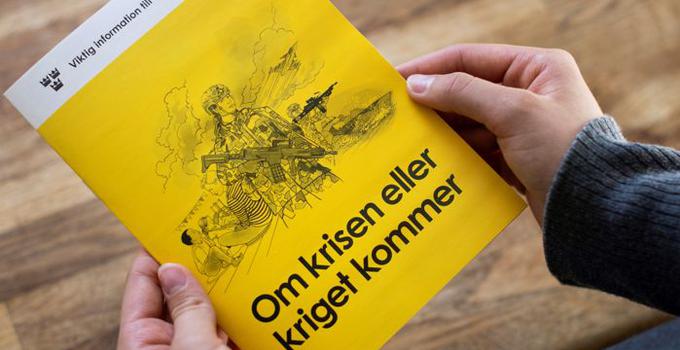
The project will examine how women and women’s sections contribute to defence and preparedness in Sweden and Finland. Since Russia’s full-scale invasion of Ukraine, both countries have intensified their preparations for potential conflict. Information material on crisis and war has been distributed to all households, with a clear message: all citizens are expected to contribute to national resilience.
Studying women’s everyday preparedness work
For women, who remain a minority within the Nordic armed forces, this development raises important questions, says Jenny Hedström, Associate Professor of War Studies and the project leader.
“We will investigate what the increased expectation of wartime preparedness means for women, both in everyday life and through their organising in women’s sections. Through feminist and critical research in political economy, international relations and war studies, we aim to highlight the often invisible work that women perform within total defence”, she says.
The project builds on research showing that women’s voluntary defence organisations have historically played central roles in wartime preparations, both in the Nordic region and internationally.
Two neighbouring countries – different experiences of war
Despite their geographical proximity, Sweden and Finland have different historical experiences of war and defence preparedness. Sweden has not seen war on its territory for over 200 years and dismantled parts of its defence during the 2000s, while Finland maintained a strong conscription-based defence and has never pursued disarmament as a political goal.
Today, both countries are members of NATO, but developments still differ. Finland continues to operate conscription primarily for men, while Sweden also calls up women for total defence duties.
“These differences make the comparison particularly interesting. The project can generate new knowledge about how gender shapes wartime preparedness in two Western democracies that are both rearming but have entirely different historical starting points”, says Jenny Hedström.
The research will also deepen understanding of how women’s sections shape perceptions of gendered roles within national defence.
Building on previous research
The project draws on Jenny Hedström’s earlier studies in Myanmar, where she developed the concept of militarised social reproduction (MSR) – a way of analysing women’s emotional, material and symbolic labour in conflict-affected areas.
“By applying MSR to Sweden and Finland, we can develop the concept in a completely new context while also making visible women’s everyday work in the ongoing Western rearmament”, she says.
The three-year project will begin on a small scale in 2026 and be fully underway in 2027.
Page information
- Published:
- 2025-11-24
- Last updated:
- 2025-11-26