Search

Search

War and Defence – two year Master's Programme
120.0 credits, Programme, Stockholm, Second cycle
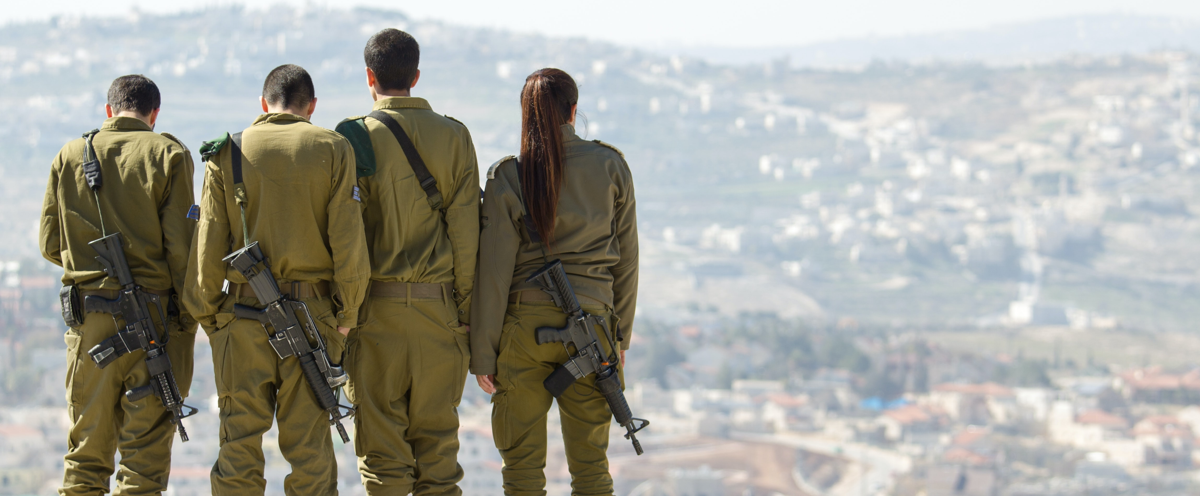
A group of soldiers standing on top of a hill.

This master’s programme is a unique two-year programme in War Studies that gives students an advanced, broad and deep understanding of matters relating to war, security and defence.

The various modules explain how different modes of warfare are conducted, how modern defence systems are built and organised, and how security policies are designed and the impact they have on the world around us.

Application opens:
2026-10-16
Last day for application:
2027-01-15
Education start:
Autumn semester 2027
Scope:
120.0 credits
Study mode:
Campus
Study period:
2027-08-30 - 2029-06-03
Study pace:
100%
Education cycle:
Second cycle
Language of instruction:
English

Entry requirements

Officers’ Programme degree or a Bachelor's degree corresponding to 180 credits, of which 90 credits must be in War Studies or another relevant subject such as International Relations, Peace and Conflict Studies, Security Studies, or Political Science.

A graded independent research project (BA thesis) or the equivalent (for applicants with foreign academic qualifications).

In addition, a level of proficiency in the English language, corresponding to English 6/English B is required.

Students with a Swedish Bachelor's degree meet this language requirement.

Certain elective courses may have additional entry requirements in order to ensure students can properly benefit from the course.
Application code:
P2702
Program code:
2MKF1

Selection is based on a comprehensive assessment of previous studies and the relevance of previous studies. Particular importance is given to the quality of the Bachelor’s thesis (or academics works) in terms of grade and subject relevance.

Degree in War Studies

This course leads to a Master’s Degree in War Studies: a degree course that is the only one of its kind available in Sweden.

The programme provides both advanced training in critical thinking, independent judgement, and tools to help you analyse complex processes, at the same time giving you deeper insight into how war, peace and security policies come to be shaped by different actors. This programme will boost your theoretical knowledge and provide training in both advanced scientific methods and analytical skills.

The programme also gives you the opportunity to take part in international student exchanges at highly reputed universities in Europe via the Erasmus programme, and you will also be able to enter the internship programme which provides relevant practical experience at public agencies, international organisations and private sector security companies.

Of all the academic institutions in Sweden, the Swedish Defence University (SEDU) it the only one that offers the unique Master’s Programme in War and Defence. Successful students move on to careers in relevant fields in public agencies and government departments, such as ministries for foreign affairs, defense research agencies, and agencies and organisations involved in civil contingencies work. In the private sector there are openings in security companies in fields ranging from cybersecurity to total defence, and in both national and international organisations such as the EU and the UN. In addition to jobs as researchers and analysts there are also job opportunities in civil defence and contingency planning at local, regional and national levels. For graduates who are Swedish citizens there are also openings for a civilian career in the Swedish Armed Forces.

Successful completion of the course also makes you eligible for a number of research programmes, for example in the fields of war studies, political science, peace and conflict research and international relations.

War Studies is the multi-disciplinary study of war. It explores the ways in which war and defence are conducted and organised. Some of the central issues addressed by the programme include military strategy and organisation of a country’s defence systems. The use of military force and the organization of military structures often play an important role in security and peace missions and the course also deals with such topics as humanitarian interventions, peace keeping, and security policy. As a participant in the programme you will have access to a broad range of elective courses, for example from political science, crisis management and of course war studies. You will participate in these together with students from other programmes, which makes for an interesting and valuable blend of perspectives.

The programme will give you rigorous training in scientific methods to promote advanced analytical skills. Scenario-based roleplay, war gaming and a semester devoted to practical training also form part of the programme. In other words, the programme will give you not only theoretical and case-based knowledge of war and defence but also relevant practical and vocational skills.

At the Swedish Defence University students have access to Sweden’s foremost experts in war studies; lecturers and researchers who are not only leaders in their field, but who also frequently act as consultants to the media. The research conducted in the the field of war studies covers a broad range of subjects from military strategy, total defence, and civil war, to peacekeeping operations and war and gender.

Structure of the programme: overview by semester

The study of war and conflict (15 credits)

Research Design and Methods, War studies (15 credits)

During your first semester you will read an introductory course in war studies with focus on how and why states exercise military power, followed by a course in scientific method. The introductory course gives a basic grounding in war studies, while the course in methodology teaches you how to analyse and understand warfare and the organisation of war and defence in a scientific framework.

Elective courses (30 credits) - see box "Semester 2 and 4, examples of elective courses" below.

The range of elective courses will be determined on an annual basis.

In your second semester you will read four elective course. You decide for yourself if you wish to delve deeper into a specific area by following the suggested thematic tracks, or if you would prefer to read courses with a broader span. The elective courses offer a broad spectrum of subject matter. For example, you could choose in-depth studies of various types of warfare, strategy or defence or opt for courses in political science focusing on security policy, crisis management or policy analysis. In other words, the master programme offers both breadth and in-depth knowledge based on the latest research findings.

Master's Thesis, War Studies (30 credits)

The third semester is reserved for work on your master’s dissertation. This gives you the opportunity to conduct an in-depth study of the issues that interest you most and to test your proficiency in scientific methods.

Internship, War studies (30 credits)

or Elective courses (30 credits) - see box "Semester 2 and 4, examples of elective courses" below.

For the fourth semester you are free to decide whether you wish to apply for an internship, or if you prefer, to take additional elective courses. In other words, you can choose to engage in more empirical and theoretical studies or to focus more directly on practical situations in a work environment.

In the second and fourth semesters there are opportunities for studies abroad via our exchange agreements with partner universities.

The Swedish Defence University takes part in the Erasmus programme, which allows our students to spend a semester of their master’s training at a university abroad. Being an exchange student is an excellent ways of broadening one’s perspectives and acquiring new experiences at prestigious universities such as the University of St Andrews (Scotland), Sciences Po (France) and the University of Bologna (Italy). Our partner universities offer a wide selection of relevant courses, which means that your master’s degree may come to include several different specialties. Read more at our study abroad webpage on the Student Web.

Contact

If you have questions about the programme, please contact masterprogramme@fhs.se

Note: We are unable to provide a preliminary assessment of whether you meet the eligibility requirements before the admissions process has been completed.

Elective Courses

In the program there are several elective courses available. A selection is listed in the box "Semester 2" and "Semester 4".

FAQ about the application process

Find everything you need to know about the application process via the link below:

University Admissions Sweden is in charge centrally of all applications.

Prospective students need to apply through the Swedish national website by creating a user account on www.universityadmissions.se.

Please do not send any documents directly to SEDU. All documents should be uploaded with your application on universityadmissions.se

The admission round for studies beginning autumn 2027 is open from 15 October 2026, and closes 15 January 2027. There is an extended deadline until Feb 1st to upload documents. Admission results are announced April 1st 2027.

For more dates and details, please go to universityadmissions.se

We do not offer any pre-assessments on individual applications or academic backgrounds before application.

We look at the applicant’s whole curriculum to see if the requirements are met. If an applicant does not have the specific degrees mentioned on the website, our admissions team will look at the applicant’s curriculum to see if there are enough courses within the degree that could be valued as equivalent.

However, you can see the specific requirements for each programme via the links below:

Politics, Security and Crisis

War and Defence

Innovation, Defence and Security

International Operational Law

If you do not hold a bachelor’s degree when applying, you must provide:

A signed and stamped document from your home university stating that you are likely to graduate before the semester start at SEDU.

Please read more and use the statement of enrollment status form and upload it under your personal account on www.universityadmissions.se

If conditionally admitted, proof of your official Degree must be presented prior to the start of the programme in order for SEDU to remove the condition. If you are conditionally admitted and fail to prove your degree, your admission is no longer valid since this is a mandatory requirement for eligibility.

If your Bachelor thesis is not graded and uploaded by the deadline your thesis cannot be part of the evaluation and this will affect the merit ranking.

For the programmes Politics, Security and Crisis and War and Defence a solution is offered if

  • The applicant is in the final year of studies and the thesis grade has yet not been obtained, or
  • The applicants comes from a study background where a bachelor thesis was not part of the Bachelor curriculum at all.

If one of these cases applies to you, you are given the opportunity to upload two academic papers instead. These papers must have obtained official grades.

The papers and their respective grades must be uploaded by the deadline under your www.universityadmissions account in the document section.

If the grades do not clearly show on your official transcripts, you must upload some proof of the grade obtained for each piece through additional uploads of the grade. It could be a print screen from the study portal or learning platform where you received the grade.

We offer approximately 1-3 UHR scholarships per year.

For the Swedish Institute Scholarship, other timelines may apply. Only applicants who have applied for our English-taught Master programmes through www.universityadmissions.se with a valid application number can apply.

Application and Tuition Fees (for applicants outside the EU)

  • Application fee for citizen outside of EU/EEA/Switzerland: SEK 900
  • Tuition fee for citizen outside of EU/EEA/Switzerland: SEK 123,500 per year (60 credits)

Discover the Swedish Defence University

Watch the film for information on War Studies and Political Science.

Voices on the programme